



Trending
€57.50
€62.50
€35.95
€62.50
€62.50
Lungwort - Pulmonaria officinalis
€5.91 €6.95 -15%
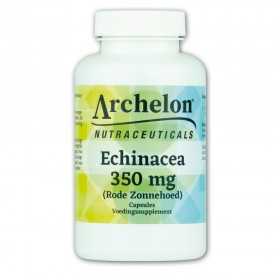
Echinacea (Red Coneflower) - 350 mg
€15.96 €19.95 -20%
Heart
There are 129 products.
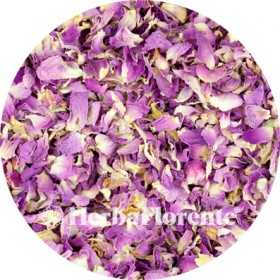
Rose - Rosae damascena
Rosae damascena, also known as the damask rose, is a versatile flower with many names, including the Iranian rose, Bulgarian rose, Taif rose, Ispahan rose and Castile rose.
These flowers are known for their delicate fragrance and are grown commercially for rose oil, both "rose otto" and "rose absolute", which is widely used in perfumery. They are also used to make rose water and "rose concrete". The petals are even edible and are used to flavor dishes, as a garnish, to make herbal tea and to preserve gulkand in sugar. Moreover, the damask rose is the national flower of Iran.
These flowers are known for their delicate fragrance and are grown commercially for rose oil, both "rose otto" and "rose absolute", which is widely used in perfumery. They are also used to make rose water and "rose concrete". The petals are even edible and are used to flavor dishes, as a garnish, to make herbal tea and to preserve gulkand in sugar. Moreover, the damask rose is the national flower of Iran.
€12.50
From: €12.50
Rose Root - Rhodiola rosea
Out-of-Stock
Rhodiola rosea (Rhodiola rosea), also known as "golden root," is a succulent plant that grows naturally in cold, rocky regions around the world. The plant's roots have a distinctive scent reminiscent of roses.
Rhodiola rosea is traditionally used in various cultures and is incorporated into herbal preparations. The root naturally contains several plant compounds, including rosavin and salidroside. These compounds are part of the root's composition and contribute to the herb's characteristic properties.
Rhodiola rosea can be used in herbal teas and other herbal products and is prized for its natural origins and rich composition.
Rhodiola rosea is traditionally used in various cultures and is incorporated into herbal preparations. The root naturally contains several plant compounds, including rosavin and salidroside. These compounds are part of the root's composition and contribute to the herb's characteristic properties.
Rhodiola rosea can be used in herbal teas and other herbal products and is prized for its natural origins and rich composition.
€20.00
From: €20.00
Rosemary - 250 mg
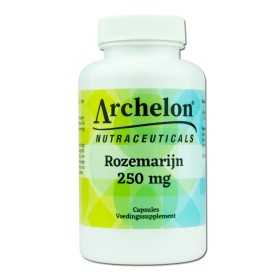
Rosemary (Rosmarinus officinalis L.) is a fragrant, compact shrub from the Lamiaceae family. This versatile herb has been used for centuries in cooking and for various purposes. Native to Mediterranean regions, rosemary blooms in spring with small, lavender-blue flowers.
The name "rosemary" comes from the Latin ros ("dew") and marinus ("sea"), which together mean "dew of the sea." Rosemary contains various natural plant compounds and aromas that contribute to its characteristic scent and flavor. It is used in herb blends, teas, and food products.
The name "rosemary" comes from the Latin ros ("dew") and marinus ("sea"), which together mean "dew of the sea." Rosemary contains various natural plant compounds and aromas that contribute to its characteristic scent and flavor. It is used in herb blends, teas, and food products.
€19.95
Rosemary - Rosmarini officinalis
Rosemary (Rosmarinus officinalis L.) is a fragrant, compact shrub from the Lamiaceae family. Native to the Mediterranean region, it is known for its aromatic leaves and lavender-blue flowers that appear in spring.
The name "rosemary" derives from the Latin: ros meaning "dew" and marinus meaning "sea," together meaning "dew of the sea." Rosemary has been prized for centuries in diverse cultures, from the ancient Greeks to the Romans, and is used in culinary dishes and herbal teas.
Rosemary naturally contains plant compounds, including aromatic oils and antioxidants, which contribute to the herb's characteristic aroma and flavor. It is used in a wide variety of dishes, from meat and fish dishes to sauces and marinades, and is also popular in aromatic oils and spice blends.
The name "rosemary" derives from the Latin: ros meaning "dew" and marinus meaning "sea," together meaning "dew of the sea." Rosemary has been prized for centuries in diverse cultures, from the ancient Greeks to the Romans, and is used in culinary dishes and herbal teas.
Rosemary naturally contains plant compounds, including aromatic oils and antioxidants, which contribute to the herb's characteristic aroma and flavor. It is used in a wide variety of dishes, from meat and fish dishes to sauces and marinades, and is also popular in aromatic oils and spice blends.
€2.00
From: €2.00
Rosemary - Rosmarini officinalis - Cut
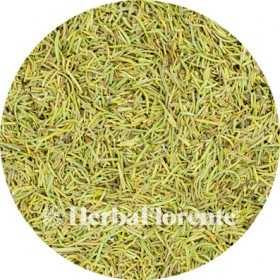
Rosemary (Rosmarinus officinalis L.) is a fragrant, compact shrub from the Lamiaceae family. Native to the Mediterranean region, it is known for its aromatic leaves and lavender-blue flowers that appear in spring.
The name "rosemary" derives from the Latin: ros meaning "dew" and marinus meaning "sea," together meaning "dew of the sea." Rosemary has been prized for centuries in diverse cultures, from the ancient Greeks to the Romans, and is used in culinary dishes and herbal teas.
Rosemary naturally contains plant compounds, including aromatic oils and antioxidants, which contribute to the herb's characteristic aroma and flavor. It is used in a wide variety of dishes, from meat and fish dishes to sauces and marinades, and is also popular in aromatic oils and spice blends.
The name "rosemary" derives from the Latin: ros meaning "dew" and marinus meaning "sea," together meaning "dew of the sea." Rosemary has been prized for centuries in diverse cultures, from the ancient Greeks to the Romans, and is used in culinary dishes and herbal teas.
Rosemary naturally contains plant compounds, including aromatic oils and antioxidants, which contribute to the herb's characteristic aroma and flavor. It is used in a wide variety of dishes, from meat and fish dishes to sauces and marinades, and is also popular in aromatic oils and spice blends.
€2.00
From: €2.00
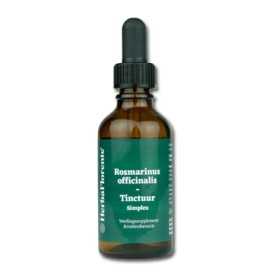
Rosemary Tincture - Rosmarinus officinalis Tincture
Single herbal tincture made with dried leaf of Rosmarinus officinalis (Rosemary).
Rosemary (Rosmarinus officinalis L.) is a fragrant, compact shrub from the Lamiaceae family. Native to the Mediterranean region, it is known for its aromatic leaves and lavender-blue flowers that appear in spring.
The name "rosemary" derives from the Latin: ros meaning "dew" and marinus meaning "sea," together meaning "dew of the sea." Rosemary has been prized for centuries in diverse cultures, from the ancient Greeks to the Romans, and is used in culinary dishes and herbal teas.
Rosemary (Rosmarinus officinalis L.) is a fragrant, compact shrub from the Lamiaceae family. Native to the Mediterranean region, it is known for its aromatic leaves and lavender-blue flowers that appear in spring.
The name "rosemary" derives from the Latin: ros meaning "dew" and marinus meaning "sea," together meaning "dew of the sea." Rosemary has been prized for centuries in diverse cultures, from the ancient Greeks to the Romans, and is used in culinary dishes and herbal teas.
€10.95
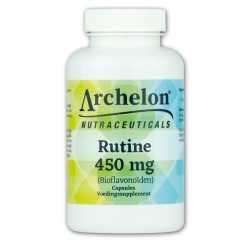
Rutin - 450 mg
Rutin, also known as a flavonoid or bioflavonoid, is a naturally occurring substance in vegetables, fruits, herbs, and plants. It is known for its vibrant pigmentation and can appear in various colors. Rutin plays several important roles in plants, such as regulating growth, protecting against UV radiation, oxidation, and heat, and maintaining the plant's metabolism.
€29.95
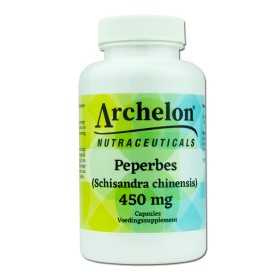
Schisandra chinensis - 450 mg
Schisandra (Schisandra chinensis), also known as the Schisandra berry, is a plant that has been used in traditional Chinese herbal medicine for over 2,000 years. Only the berries and their seeds are harvested, preferably after the first frost, and then dried in the sun. Schisandra berries contain various natural compounds, such as lignans and antioxidants, and are used in supplements, teas, and herbal blends. The berries are dark red and prized for their versatile uses in herbal culture. Our Schisandra product is carefully prepared to preserve the natural composition of the berries and is completely plant-based, suitable for vegetarians and vegans. It can easily be incorporated into a varied diet as part of a daily routine.
€28.95
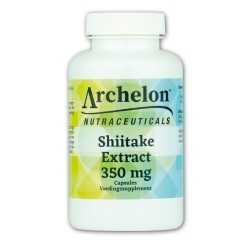
Shiitake Extract - 350 mg
Shiitake (Lentinula edodes) has its origins in the Far East and plays an important role in traditional Chinese medicine. This mushroom is extremely versatile thanks to its rich range of nutrients. It is, among other things, a good source of B vitamins, vitamin C, potassium, magnesium, phosphorus, fiber and proteins. Compared to mushrooms, shiitake contains 15 times more vitamin B6, 4 times more potassium and 10 times more magnesium. The phosphorus content is even twice as high.
Shiitake (Lentinula edodes) is a fast-growing, fleshy mushroom with a cap that varies from golden to dark brown. In Asian countries and Russia, mushrooms have been prized as popular dietary supplements for centuries, with shiitake being one of the favorites.
Shiitake (Lentinula edodes) is a fast-growing, fleshy mushroom with a cap that varies from golden to dark brown. In Asian countries and Russia, mushrooms have been prized as popular dietary supplements for centuries, with shiitake being one of the favorites.
€34.95
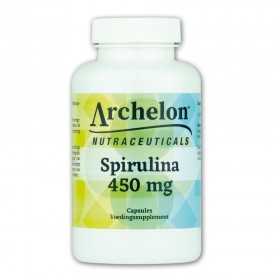
Spirulina - 450 mg
Spirulina is a blue-green, single-celled algae that grows in warm, freshwater. This microscopic algae has spiral-shaped strands and contains natural pigments such as chlorophyll (green) and phycocyanin (blue).
Spirulina naturally contains a broad spectrum of nutrients, including protein, B-complex vitamins, vitamin E, carotenoids, iron, manganese, zinc, and essential fatty acids such as gamma-linolenic acid. It is known as a rich source of beta-carotene and other carotenoids. Spirulina is often included in nutritional supplements and can be included as part of a varied and balanced diet.
Spirulina naturally contains a broad spectrum of nutrients, including protein, B-complex vitamins, vitamin E, carotenoids, iron, manganese, zinc, and essential fatty acids such as gamma-linolenic acid. It is known as a rich source of beta-carotene and other carotenoids. Spirulina is often included in nutritional supplements and can be included as part of a varied and balanced diet.
€19.95
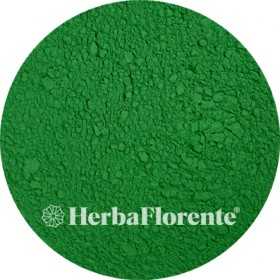
Spirulina - Spirulina platensis
Spirulina is a type of single-celled algae that contains both chlorophyll (a green pigment) and phycocyanin (a blue pigment). The algae forms spiral-shaped microscopic strands and grows naturally in warm, freshwater.
Spirulina contains various nutrients, including protein, vitamins (such as B-complex and E), carotenoids, iron, manganese, zinc, and some fatty acids. Because of this composition, spirulina is often used as part of a varied diet.
The algae can grow in warm environments and retain many of their nutrients, even during processing at higher temperatures..
Spirulina contains various nutrients, including protein, vitamins (such as B-complex and E), carotenoids, iron, manganese, zinc, and some fatty acids. Because of this composition, spirulina is often used as part of a varied diet.
The algae can grow in warm environments and retain many of their nutrients, even during processing at higher temperatures..
€2.80
From: €2.80
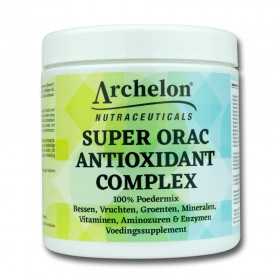
Super ORAC Antioxidant Complex
Super ORAC Antioxidant Complex is a carefully formulated powder mix containing a combination of vegetables, berries, fruits, vitamins, minerals, amino acids, and enzymes. The formula also contains polyphenols, phytonutrients, and antioxidants and was developed to complement a varied diet and a healthy lifestyle.
The ingredients have been selected with an eye for balance and coherence, making Super ORAC Antioxidant Complex easy to take and flexible to fit into your daily routine. The powder form makes it easy to mix with water, juice, or smoothies.
Super ORAC Antioxidant Complex is suitable for vegans and vegetarians, and contains no additives or preservatives.
The ingredients have been selected with an eye for balance and coherence, making Super ORAC Antioxidant Complex easy to take and flexible to fit into your daily routine. The powder form makes it easy to mix with water, juice, or smoothies.
Super ORAC Antioxidant Complex is suitable for vegans and vegetarians, and contains no additives or preservatives.
€79.50
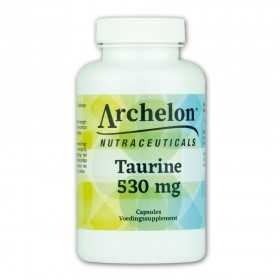
Taurine - 530 mg
Taurine is an amino acid, also called aminosulfonic acid because of its sulfur content. It occurs naturally in various mammalian tissues and was first isolated from the bile of a bull, hence its name ('taurus' is Latin for bull). Taurine can be synthesized by the body from the amino acids methionine and cysteine, but it is also found in foods, primarily in protein-rich animal foods such as meat, fish, shellfish, poultry, and eggs. Because of its presence in many food products, taurine is sometimes added to supplements.
€16.95
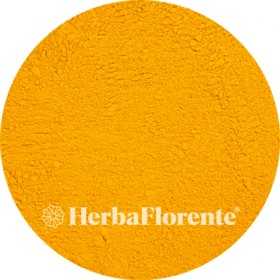
Tumeric long. - Curcumae longae
Turmeric, also known as turmeric (Curcuma longa), is a tropical plant native to India and Southeast Asia. The root has been used for centuries and is best known in powdered form. In the Netherlands, it is often called "geelwortel" (yellow root) because of its bright yellow color, which is used in curry mixtures, mustard, and other culinary preparations.
Turmeric plays an important role in various Asian cuisines, where it is valued for its color, aroma, and distinctive flavor. The root is found in historical and cultural sources and was traditionally incorporated into dishes and spice blends.
Turmeric plays an important role in various Asian cuisines, where it is valued for its color, aroma, and distinctive flavor. The root is found in historical and cultural sources and was traditionally incorporated into dishes and spice blends.
€2.00
From: €2.00
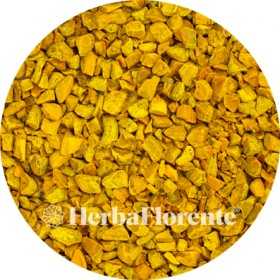
Tumeric long. - Curcumae longae - Cut
Turmeric, also known as turmeric (Curcuma longa), is a tropical plant native to India and Southeast Asia. The root has been used for centuries and is best known in powdered form. In the Netherlands, it is often called "geelwortel" (yellow root) because of its bright yellow color, which is used in curry mixtures, mustard, and other culinary preparations.
Turmeric plays an important role in various Asian cuisines, where it is valued for its color, aroma, and distinctive flavor. The root is found in historical and cultural sources and was traditionally incorporated into dishes and spice blends.
Turmeric plays an important role in various Asian cuisines, where it is valued for its color, aroma, and distinctive flavor. The root is found in historical and cultural sources and was traditionally incorporated into dishes and spice blends.
€2.00
From: €2.00
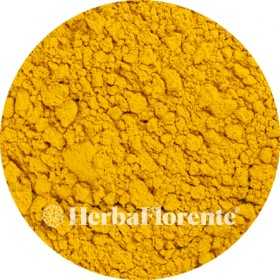
Tumeric zanth. - Curcumae zanthorrhizae
Turmeric, also known as Javanese ginger (Curcuma xanthorrhiza), is a tropical plant native to India and Southeast Asia. The root of this plant has been used for centuries and is best known in powdered form. In the Netherlands, turmeric is also known as yellow root (gelukkigroot) because of its intense yellow color, which is used in curry mixtures and mustard, among other things.
Turmeric plays an important role in various Asian cuisines, where it is valued for its color, aroma, and characteristic flavor. Besides its culinary uses, turmeric is traditionally described in historical and cultural sources from India and Indonesia, where the root played an integral role in daily life.
Turmeric plays an important role in various Asian cuisines, where it is valued for its color, aroma, and characteristic flavor. Besides its culinary uses, turmeric is traditionally described in historical and cultural sources from India and Indonesia, where the root played an integral role in daily life.
€2.40
From: €2.40
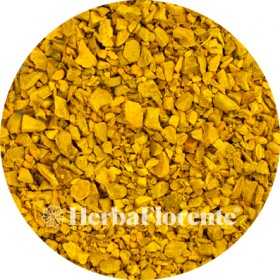
Tumeric zanth. - Curcumae zanthorrhizae - Cut
Turmeric, also known as Javanese ginger (Curcuma xanthorrhiza), is a tropical plant native to India and Southeast Asia. The root of this plant has been used for centuries and is best known in powdered form. In the Netherlands, turmeric is also known as yellow root (gelukkigroot) because of its intense yellow color, which is used in curry mixtures and mustard, among other things.
Turmeric plays an important role in various Asian cuisines, where it is valued for its color, aroma, and characteristic flavor. Besides its culinary uses, turmeric is traditionally described in historical and cultural sources from India and Indonesia, where the root played an integral role in daily life.
Turmeric plays an important role in various Asian cuisines, where it is valued for its color, aroma, and characteristic flavor. Besides its culinary uses, turmeric is traditionally described in historical and cultural sources from India and Indonesia, where the root played an integral role in daily life.
€2.00
From: €2.00
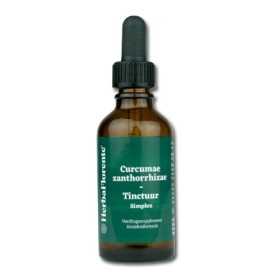
Tumeric zanthorrhiza Tincture - Curcumae zanthorrhizae Tincture
Single herbal tincture made with dried root of Curcumae zanthorrhizae (Tumeric).
Turmeric, also known as Javanese ginger (Curcuma xanthorrhiza), is a tropical plant native to India and Southeast Asia. The root of this plant has been used for centuries and is best known in powdered form. In the Netherlands, turmeric is also known as yellow root (gelukkigroot) because of its intense yellow color, which is used in curry mixtures and mustard, among other things.
Turmeric plays an important role in various Asian cuisines, where it is valued for its color, aroma, and characteristic flavor. Besides its culinary uses, turmeric is traditionally described in historical and cultural sources from India and Indonesia, where the root played an integral role in daily life.
Turmeric, also known as Javanese ginger (Curcuma xanthorrhiza), is a tropical plant native to India and Southeast Asia. The root of this plant has been used for centuries and is best known in powdered form. In the Netherlands, turmeric is also known as yellow root (gelukkigroot) because of its intense yellow color, which is used in curry mixtures and mustard, among other things.
Turmeric plays an important role in various Asian cuisines, where it is valued for its color, aroma, and characteristic flavor. Besides its culinary uses, turmeric is traditionally described in historical and cultural sources from India and Indonesia, where the root played an integral role in daily life.
€9.95
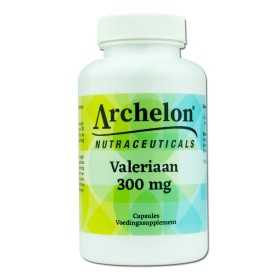
Valerian - 300 mg
Valerian (Valeriana officinalis) is a perennial plant native to the Netherlands, particularly in well-drained, moist soil. The roots have a distinctive, strong odor. The name "valerian" may derive from the Latin valere, meaning "strong." Historically, valerian was used in various traditions: bridal couples wore wreaths of valerian leaves, while farmers associated the herb with protecting their livestock. The aroma of the roots is due to various natural compounds found in the plant. Valerian is often prepared in dried roots, powders, and supplements.
€19.95
Valerian - Valerianae officinalis
Valerian (Valeriana officinalis) is a plant with a long history of use in Europe. It is still common in the Netherlands and prefers airy, moist soil. The roots of the plant, in particular, are known for their strong and distinctive odor, which attracts cats, among other things.
Valerian has been used in folk customs and traditions since ancient times. Our ancestors employed the herb in rituals and symbolic practices, for example, to ward off evil. Brides and grooms wore wreaths of valerian leaves, and farmers used the herb in traditional agricultural practices.
Valerian's distinct scent is due to the natural plant compounds found in the root. Today, valerian is primarily valued for its characteristic properties and historical significance.
Valerian has been used in folk customs and traditions since ancient times. Our ancestors employed the herb in rituals and symbolic practices, for example, to ward off evil. Brides and grooms wore wreaths of valerian leaves, and farmers used the herb in traditional agricultural practices.
Valerian's distinct scent is due to the natural plant compounds found in the root. Today, valerian is primarily valued for its characteristic properties and historical significance.
€3.70
From: €3.70
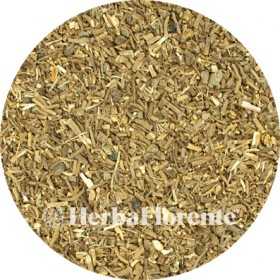
Valerian - Valerianae officinalis - Cut
Valerian (Valeriana officinalis) is a plant with a long history of use in Europe. It is still common in the Netherlands and prefers airy, moist soil. The roots of the plant, in particular, are known for their strong and distinctive odor, which attracts cats, among other things.
Valerian has been used in folk customs and traditions since ancient times. Our ancestors employed the herb in rituals and symbolic practices, for example, to ward off evil. Brides and grooms wore wreaths of valerian leaves, and farmers used the herb in traditional agricultural practices.
Valerian's distinct scent is due to the natural plant compounds found in the root. Today, valerian is primarily valued for its characteristic properties and historical significance.
Valerian has been used in folk customs and traditions since ancient times. Our ancestors employed the herb in rituals and symbolic practices, for example, to ward off evil. Brides and grooms wore wreaths of valerian leaves, and farmers used the herb in traditional agricultural practices.
Valerian's distinct scent is due to the natural plant compounds found in the root. Today, valerian is primarily valued for its characteristic properties and historical significance.
€2.40
From: €2.40
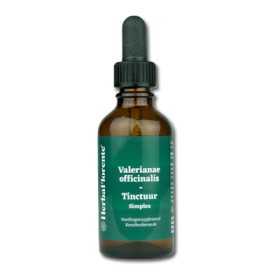
Valerian Tincture - Valerianae officinalis Tincture
Single herbal tincture made with dried root of Valerianae officinalis (Valerian).
Valerian (Valeriana officinalis) is a plant with a long history of use in Europe. It is still common in the Netherlands and prefers airy, moist soil. The roots of the plant, in particular, are known for their strong and distinctive odor, which attracts cats, among other things.
Valerian has been used in folk customs and traditions since ancient times. Our ancestors employed the herb in rituals and symbolic practices, for example, to ward off evil. Brides and grooms wore wreaths of valerian leaves, and farmers used the herb in traditional agricultural practices.
Valerian (Valeriana officinalis) is a plant with a long history of use in Europe. It is still common in the Netherlands and prefers airy, moist soil. The roots of the plant, in particular, are known for their strong and distinctive odor, which attracts cats, among other things.
Valerian has been used in folk customs and traditions since ancient times. Our ancestors employed the herb in rituals and symbolic practices, for example, to ward off evil. Brides and grooms wore wreaths of valerian leaves, and farmers used the herb in traditional agricultural practices.
€10.95
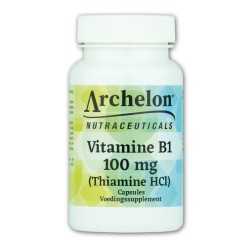
Vitamin B1 (Thiamine HCl) - 100 mg
Vitamin B1 (Thiamine) is a water-soluble vitamin found in foods such as whole grains, legumes, nuts, pork, and some vegetables. In the body, vitamin B1 is converted to its active form, thiamine pyrophosphate (TTP), in which magnesium plays a role. TTP is a form of thiamine found in cells and is involved in various biochemical reactions. Vitamin B1 is stored in small amounts in the liver and can be supplemented through food or supplements.
€19.95
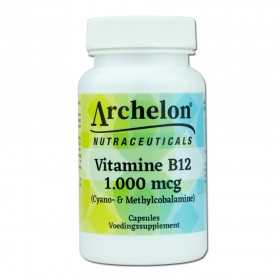
Vitamin B12 (Cyano- & Methylcoblamin) - 1,000 mcg
Vitamin B12 is a water-soluble vitamin found naturally in foods such as meat, fish, eggs, and dairy. It's a nutrient absorbed by the body through food or supplements. Vitamin B12 is stored in the liver and can be transported to cells via the bloodstream, where it becomes part of the natural composition of nutrients.
€19.95