



Trending
€57.50
€62.50

€35.95
€62.50
€62.50
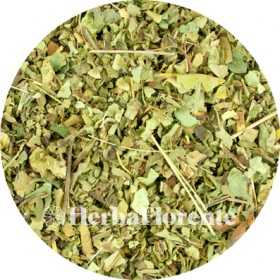
Lungwort - Pulmonaria officinalis
€5.91 €6.95 -15%
Echinacea (Red Coneflower) - 350 mg
€15.96 €19.95 -20%
List of products by brand HerbaFlorente
There are 288 products.
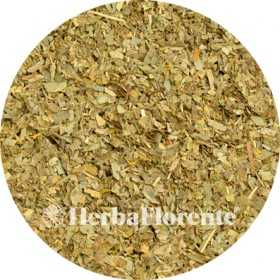
Ginkgo (Maidenhair tree) - Ginkgo bilobae - Cut
The Ginkgo biloba (Maidenhairtree), also known as the Japanese temple tree, is a unique deciduous tree with a very long history. The species has been mentioned for centuries in botanical and cultural sources from East Asia and is native to China.
Ginkgo biloba is unique within the plant kingdom and is considered a species with no direct relatives. For this reason, Charles Darwin called the ginkgo a "living fossil." The tree has existed for approximately 250 million years and has survived several mass extinctions. Today, it is planted worldwide as an ornamental and avenue tree.
Ginkgo biloba is unique within the plant kingdom and is considered a species with no direct relatives. For this reason, Charles Darwin called the ginkgo a "living fossil." The tree has existed for approximately 250 million years and has survived several mass extinctions. Today, it is planted worldwide as an ornamental and avenue tree.
€3.00
From: €3.00
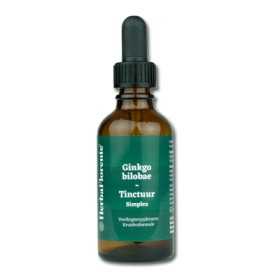
Ginko (Maidenhair tree) Tincture - Ginkgo bilobae Tincture
Single herbal tincture made with dried leaves of Ginkgo bilobae (Ginko - Maidenhair tree).
The Ginkgo biloba Maidenhair tree), also known as the Japanese temple tree, is a unique deciduous tree with a very long history. The species has been mentioned for centuries in botanical and cultural sources from East Asia and is native to China.
Ginkgo biloba is unique within the plant kingdom and is considered a species with no direct relatives. For this reason, Charles Darwin called the ginkgo a "living fossil." The tree has existed for approximately 250 million years and has survived several mass extinctions. Today, it is planted worldwide as an ornamental and avenue tree.
The Ginkgo biloba Maidenhair tree), also known as the Japanese temple tree, is a unique deciduous tree with a very long history. The species has been mentioned for centuries in botanical and cultural sources from East Asia and is native to China.
Ginkgo biloba is unique within the plant kingdom and is considered a species with no direct relatives. For this reason, Charles Darwin called the ginkgo a "living fossil." The tree has existed for approximately 250 million years and has survived several mass extinctions. Today, it is planted worldwide as an ornamental and avenue tree.
€10.95
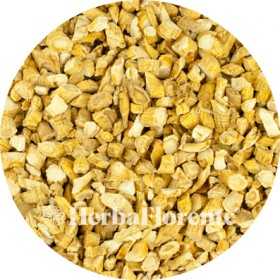
Ginseng (Panax) - Ginseng Panax - Cut
Panax ginseng is a plant with a slow-growing, sturdy root and belongs to the Araliaceae family. It is one of the most well-known plants in traditional Chinese medicine and has been used in Asia for thousands of years.
The name "Panax" comes from the Greek word for "all-healer," referring to the plant's historical reputation in traditional medicine. Panax ginseng contains unique compounds called ginsenosides, which are found only in this plant.
Other plants with "ginseng" in their names, such as Siberian ginseng (Eleutherococcus senticosus) or Indian ginseng/Ashwagandha (Withania somnifera), belong to different plant families and do not contain these specific ginsenosides.
The name "Panax" comes from the Greek word for "all-healer," referring to the plant's historical reputation in traditional medicine. Panax ginseng contains unique compounds called ginsenosides, which are found only in this plant.
Other plants with "ginseng" in their names, such as Siberian ginseng (Eleutherococcus senticosus) or Indian ginseng/Ashwagandha (Withania somnifera), belong to different plant families and do not contain these specific ginsenosides.
€16.00
From: €16.00
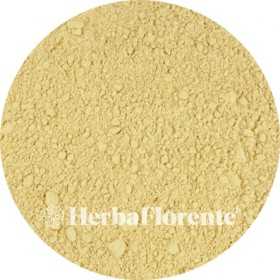
Ginseng (Panax) - Panax ginseng
Panax ginseng is a plant with a slow-growing, sturdy root and belongs to the Araliaceae family. It is one of the most well-known plants in traditional Chinese medicine and has been used in Asia for thousands of years.
The name "Panax" comes from the Greek word for "all-healer," referring to the plant's historical reputation in traditional medicine. Panax ginseng contains unique compounds called ginsenosides, which are found only in this plant.
Other plants with "ginseng" in their names, such as Siberian ginseng (Eleutherococcus senticosus) or Indian ginseng/Ashwagandha (Withania somnifera), belong to different plant families and do not contain these specific ginsenosides.
The name "Panax" comes from the Greek word for "all-healer," referring to the plant's historical reputation in traditional medicine. Panax ginseng contains unique compounds called ginsenosides, which are found only in this plant.
Other plants with "ginseng" in their names, such as Siberian ginseng (Eleutherococcus senticosus) or Indian ginseng/Ashwagandha (Withania somnifera), belong to different plant families and do not contain these specific ginsenosides.
€16.00
From: €16.00
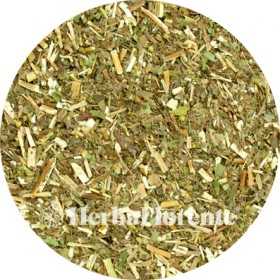
Goldenrod - Solidago virgaurea - Cut
Goldenrod (Solidago virgaurea), also known as goldenrod, is a native plant traditionally found in Europe and Asia. The plant is striking for its golden-yellow blooms and was once a familiar part of traditional Dutch herb gardens.
Historically, goldenrod flowers were widely harvested, dried, and ground. These were used, among other things, as a natural raw material for making yellow dyes. The plant is frequently mentioned in historical and botanical sources for its striking appearance and wide use in craft and cultural traditions.
Today, goldenrod is primarily valued for its botanical characteristics and its role in European plant history.
Historically, goldenrod flowers were widely harvested, dried, and ground. These were used, among other things, as a natural raw material for making yellow dyes. The plant is frequently mentioned in historical and botanical sources for its striking appearance and wide use in craft and cultural traditions.
Today, goldenrod is primarily valued for its botanical characteristics and its role in European plant history.
€2.00
From: €2.00
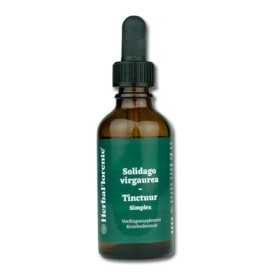
Goldenrod Tincture - Solidago virgaurea Tincture
Single herbal tincture made with dried herb of Solidago virgaurea (Goldenrod).
Goldenrod (Solidago virgaurea), also known as goldenrod, is a native plant traditionally found in Europe and Asia. The plant is striking for its golden-yellow blooms and was once a familiar part of traditional Dutch herb gardens.
Historically, goldenrod flowers were widely harvested, dried, and ground. These were used, among other things, as a natural raw material for making yellow dyes. The plant is frequently mentioned in historical and botanical sources for its striking appearance and wide use in craft and cultural traditions.
Today, goldenrod is primarily valued for its botanical characteristics and its role in European plant history.
Goldenrod (Solidago virgaurea), also known as goldenrod, is a native plant traditionally found in Europe and Asia. The plant is striking for its golden-yellow blooms and was once a familiar part of traditional Dutch herb gardens.
Historically, goldenrod flowers were widely harvested, dried, and ground. These were used, among other things, as a natural raw material for making yellow dyes. The plant is frequently mentioned in historical and botanical sources for its striking appearance and wide use in craft and cultural traditions.
Today, goldenrod is primarily valued for its botanical characteristics and its role in European plant history.
€10.95
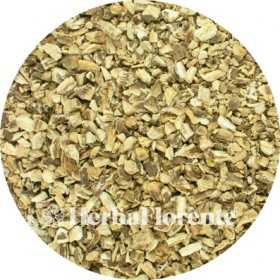
Great Burdock - Arctium lappa
Burdock (also known as greater burdock root in English) belongs to the Asteraceae family. The root grows best in moist, nitrate-rich soils, preferably in sun or light shade, and in temperate climates. Burdock can be found near houses and fields, on ruins, roadsides, fallow land, forest clearings, at the edges of forests, and in hedgerows. The root can grow to over a meter long.
Burdock has been used for centuries in various traditional herbal systems, such as Ayurveda and Chinese herbal medicine. The root contains various vitamins (C, B1, B2, B3, B6, B12, and E), beta-carotene, biotin, phenolic acids, polyacetylenes, bitter compounds, and phytosterols. The plant is versatile and is used in both culinary and herbal products.
Burdock has been used for centuries in various traditional herbal systems, such as Ayurveda and Chinese herbal medicine. The root contains various vitamins (C, B1, B2, B3, B6, B12, and E), beta-carotene, biotin, phenolic acids, polyacetylenes, bitter compounds, and phytosterols. The plant is versatile and is used in both culinary and herbal products.
€2.50
From: €2.50
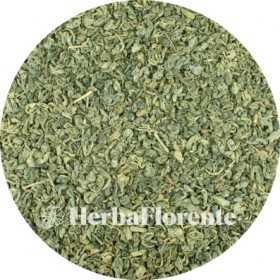
Green Tea - Gun Powder - Camellia sinensis
Gunpowder (zhūchá) is a Chinese green tea that gets its name from the grey-green, tightly rolled leaves that are reminiscent of 18th century gunpowder. Another possible explanation is that "freshly brewed" sounds like *gun-pao-da* in Chinese.
When steeped in hot water, the leaves unfold, giving the tea its characteristic grassy and sometimes smoky flavour.
In China, this tea is also known as pearl tea (珠茶). Gunpowder is mainly produced in the Ningbo region and is one of the most popular Chinese export teas. Nowadays, the balls are rolled by machine, except for the higher quality varieties, which are still made by hand.
When steeped in hot water, the leaves unfold, giving the tea its characteristic grassy and sometimes smoky flavour.
In China, this tea is also known as pearl tea (珠茶). Gunpowder is mainly produced in the Ningbo region and is one of the most popular Chinese export teas. Nowadays, the balls are rolled by machine, except for the higher quality varieties, which are still made by hand.
€2.95
From: €2.95
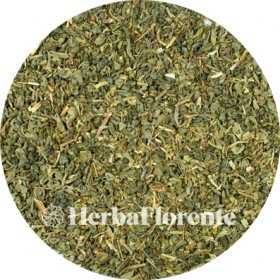
Green Tea Mint Herbal Tea
Herbal tea composed of various herbs
Delicious for every moment
Delicious for every moment
€4.95
Hawthorn (Leaf & Flower) - Crataegus laevigata, Crataegi
The two-styled hawthorn (Crataegus laevigata) is a thorny shrub or small tree native to much of Europe. In spring, it blooms with white flowers, while in autumn it produces dark red, spherical or egg-shaped berries, also known as "whitebeans."
The leaves, flowers, and berries of the hawthorn naturally contain a rich composition of plant compounds, including flavonoids, procyanidins, vitamin C, tannins, and glycosides. Because of this composition, hawthorn is traditionally used in various herbal products and supplements.
The leaves, flowers, and berries of the hawthorn naturally contain a rich composition of plant compounds, including flavonoids, procyanidins, vitamin C, tannins, and glycosides. Because of this composition, hawthorn is traditionally used in various herbal products and supplements.
€2.00
From: €2.00
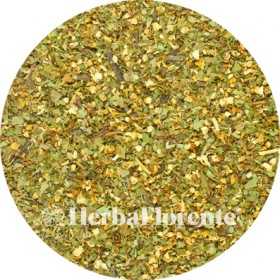
Hawthorn (Leaf & Flower) Cut - Crataegus laevigata, Crataegi
The two-styled hawthorn (Crataegus laevigata) is a thorny shrub or small tree native to much of Europe. In spring, it blooms with white flowers, while in autumn it produces dark red, spherical or egg-shaped berries, also known as "whitebeans."
The leaves, flowers, and berries of the hawthorn naturally contain a rich composition of plant compounds, including flavonoids, procyanidins, vitamin C, tannins, and glycosides. Because of this composition, hawthorn is traditionally used in various herbal products and supplements.
The leaves, flowers, and berries of the hawthorn naturally contain a rich composition of plant compounds, including flavonoids, procyanidins, vitamin C, tannins, and glycosides. Because of this composition, hawthorn is traditionally used in various herbal products and supplements.
€2.50
From: €2.50
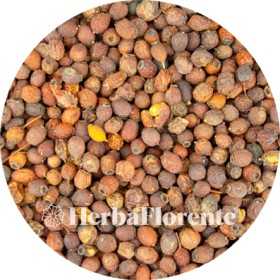
Hawthorn berry - Crataegus monogyna (Crataegus oxycantha)
The two-styled hawthorn (Crataegus laevigata) is a thorny shrub or small tree native to much of Europe. In spring, it blooms with white flowers, while in autumn it produces dark red, spherical or egg-shaped berries, also known as "whitebeans."
The leaves, flowers, and berries of the hawthorn naturally contain a rich composition of plant compounds, including flavonoids, procyanidins, vitamin C, tannins, and glycosides. Because of this composition, hawthorn is traditionally used in various herbal products and supplements.
The leaves, flowers, and berries of the hawthorn naturally contain a rich composition of plant compounds, including flavonoids, procyanidins, vitamin C, tannins, and glycosides. Because of this composition, hawthorn is traditionally used in various herbal products and supplements.
€2.20
From: €2.20
Hawthorn Tincture - Crataegus oxyacantha Tincture
Single herbal tincture made with dried leaves & flowers of Crataegus (Hawthorn).
The two-styled hawthorn (Crataegus laevigata) is a thorny shrub or small tree native to much of Europe. In spring, it blooms with white flowers, while in autumn it produces dark red, spherical or egg-shaped berries, also known as "whitebeans."
The leaves, flowers, and berries of the hawthorn naturally contain a rich composition of plant compounds, including flavonoids, procyanidins, vitamin C, tannins, and glycosides. Because of this composition, hawthorn is traditionally used in various herbal products and supplements.
The two-styled hawthorn (Crataegus laevigata) is a thorny shrub or small tree native to much of Europe. In spring, it blooms with white flowers, while in autumn it produces dark red, spherical or egg-shaped berries, also known as "whitebeans."
The leaves, flowers, and berries of the hawthorn naturally contain a rich composition of plant compounds, including flavonoids, procyanidins, vitamin C, tannins, and glycosides. Because of this composition, hawthorn is traditionally used in various herbal products and supplements.
€9.95

Heartwort - Leonurus cardiaca
Heartwort (Leonurus cardiaca) is a fragrant perennial plant that belongs to the Lamiaceae family. Originating in Central Asia, this plant has spread throughout the world.
The leaves are suitable for seasoning pea and lentil soup, and were also used in the past to brew beer.
The plant grows to a height of 30-90 cm and forms rhizomes and square stems with scattered hairs. The leaves, which are medium green in color, have three to seven lobes and are downy hairy on the underside.
The leaves are suitable for seasoning pea and lentil soup, and were also used in the past to brew beer.
The plant grows to a height of 30-90 cm and forms rhizomes and square stems with scattered hairs. The leaves, which are medium green in color, have three to seven lobes and are downy hairy on the underside.
€2.00
From: €2.00
Heartwort Tincture - Leonurus cardiaca Tincture
Single herbal tincture made with dried herb of Leonurus cardiaca (Heartwort).
Heartwort (Leonurus cardiaca) is a fragrant perennial plant that belongs to the Lamiaceae family. Originating in Central Asia, this plant has spread throughout the world.
The leaves are suitable for seasoning pea and lentil soup, and were also used in the past to brew beer.
The plant grows to a height of 30-90 cm and forms rhizomes and square stems with scattered hairs. The leaves, which are medium green in color, have three to seven lobes and are downy hairy on the underside.
Heartwort (Leonurus cardiaca) is a fragrant perennial plant that belongs to the Lamiaceae family. Originating in Central Asia, this plant has spread throughout the world.
The leaves are suitable for seasoning pea and lentil soup, and were also used in the past to brew beer.
The plant grows to a height of 30-90 cm and forms rhizomes and square stems with scattered hairs. The leaves, which are medium green in color, have three to seven lobes and are downy hairy on the underside.
€10.95
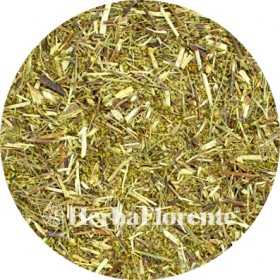
Herb Royal - Artemisia abrotani
Southernwood (Artemisia abrotanum) is a bushy, aromatic shrub belonging to the Asteraceae family. The plant is native to Southern Europe but was introduced early on to more northerly parts of Europe, where it adapted well.
Summer lemongrass has a long cultural and historical background. In ancient traditions of Germanic peoples, the plant was used symbolically in rituals, while the Romans prized it for its fragrance and made the perfume Abrotenum from it. Due to its aromatic properties, summer lemongrass was also used for household and cosmetic purposes.
Summer lemongrass has a long cultural and historical background. In ancient traditions of Germanic peoples, the plant was used symbolically in rituals, while the Romans prized it for its fragrance and made the perfume Abrotenum from it. Due to its aromatic properties, summer lemongrass was also used for household and cosmetic purposes.
€2.40
From: €2.40
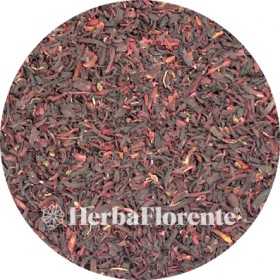
Hibiscus - Hibiscus sabdariff
Hibiscus (Hibiscus sabdariffa), also known as roselle, is used worldwide in both hot and cold beverages and as a natural flavoring and coloring agent in the food industry. The plant is especially prized for its fresh, tart flavor and striking deep red color.
Hibiscus sabdariffa L. is an annual shrub that can reach a height of over two meters. The plant typically has smooth, red-tinged stems and creamy to light yellow flowers that turn pink at the end of the day. After flowering, a characteristic red calyx develops, which is fleshy, crisp, and juicy. When this calyx fully develops and dries, it turns brown and bursts open.
Hibiscus sabdariffa L. is an annual shrub that can reach a height of over two meters. The plant typically has smooth, red-tinged stems and creamy to light yellow flowers that turn pink at the end of the day. After flowering, a characteristic red calyx develops, which is fleshy, crisp, and juicy. When this calyx fully develops and dries, it turns brown and bursts open.
€2.25
From: €2.25
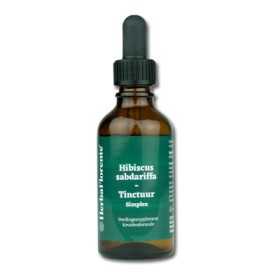
Hibiscus Tincture - Hibiscus sabdariffa Tincture
Single herbal tincture made with dried flower of Hibiscus sabdariffa (Hibiscus).
Hibiscus (Hibiscus sabdariffa), also known as roselle, is used worldwide in both hot and cold beverages and as a natural flavoring and coloring agent in the food industry. The plant is especially prized for its fresh, tart flavor and striking deep red color.
Hibiscus sabdariffa L. is an annual shrub that can reach a height of over two meters. The plant typically has smooth, red-tinged stems and creamy to light yellow flowers that turn pink at the end of the day. After flowering, a characteristic red calyx develops, which is fleshy, crisp, and juicy. When this calyx fully develops and dries, it turns brown and bursts open.
Hibiscus (Hibiscus sabdariffa), also known as roselle, is used worldwide in both hot and cold beverages and as a natural flavoring and coloring agent in the food industry. The plant is especially prized for its fresh, tart flavor and striking deep red color.
Hibiscus sabdariffa L. is an annual shrub that can reach a height of over two meters. The plant typically has smooth, red-tinged stems and creamy to light yellow flowers that turn pink at the end of the day. After flowering, a characteristic red calyx develops, which is fleshy, crisp, and juicy. When this calyx fully develops and dries, it turns brown and bursts open.
€9.95
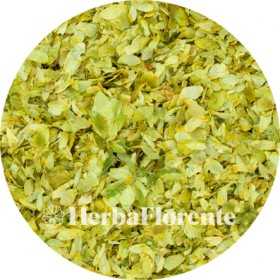
Hop - Humulus lupulus
Hops (Humulus lupulus) are a hardy, perennial climbing plant belonging to the hemp family (Cannabaceae). The name lupulus may be derived from the Latin word lupus (wolf), which refers to the way the plant twines itself around other plants.
Hops have a long cultural history. The plant was already valued by the ancient Babylonians and Egyptians for its aromatic properties. Later, hops became a staple ingredient in beer production, where they continue to play an important role today due to their characteristic flavor and aroma. Hops were also frequently described in herbals and other historical sources during the Middle Ages.
Hops have a long cultural history. The plant was already valued by the ancient Babylonians and Egyptians for its aromatic properties. Later, hops became a staple ingredient in beer production, where they continue to play an important role today due to their characteristic flavor and aroma. Hops were also frequently described in herbals and other historical sources during the Middle Ages.
€2.95
From: €2.95
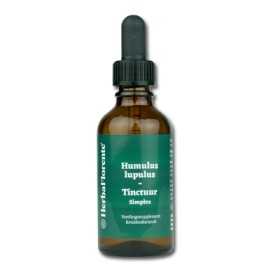
Hop Tincture - Humulus lupulus Tincture
Single herbal tincture made with dried bell of Humulus lupulus (Hops).
Hops (Humulus lupulus) are a hardy, perennial climbing plant belonging to the hemp family (Cannabaceae). The name lupulus may be derived from the Latin word lupus (wolf), which refers to the way the plant twines itself around other plants.
Hops have a long cultural history. The plant was already valued by the ancient Babylonians and Egyptians for its aromatic properties. Later, hops became a staple ingredient in beer production, where they continue to play an important role today due to their characteristic flavor and aroma. Hops were also frequently described in herbals and other historical sources during the Middle Ages.
Hops (Humulus lupulus) are a hardy, perennial climbing plant belonging to the hemp family (Cannabaceae). The name lupulus may be derived from the Latin word lupus (wolf), which refers to the way the plant twines itself around other plants.
Hops have a long cultural history. The plant was already valued by the ancient Babylonians and Egyptians for its aromatic properties. Later, hops became a staple ingredient in beer production, where they continue to play an important role today due to their characteristic flavor and aroma. Hops were also frequently described in herbals and other historical sources during the Middle Ages.
€10.95
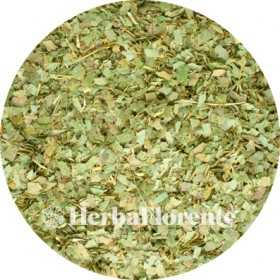
Horny Goat Herb - Yin Yang Huo - Epimedium brevicornum
Epimedium, commonly known as fairy flower, is a genus of approximately 25 species of perennial plants in the barberry family (Berberidaceae). These plants are native to southern Europe and parts of Asia, including Central, South, and East Asia.
Epimedium species are perennial and have striking, graceful flowers that appear in spring or early summer. The delicate, spidery flowers consist of four petals and add a unique touch to any garden.
In China, the plant is known as "yin yang huo." According to ancient stories, it was given this name after a goat herder noticed his animals eating the plant.
Epimedium species are perennial and have striking, graceful flowers that appear in spring or early summer. The delicate, spidery flowers consist of four petals and add a unique touch to any garden.
In China, the plant is known as "yin yang huo." According to ancient stories, it was given this name after a goat herder noticed his animals eating the plant.
€9.95
From: €9.95
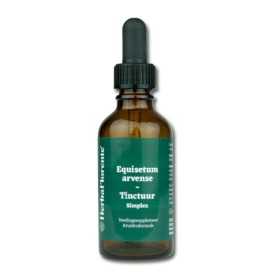
Horsetail Tincture - Equisetum arvense Tincture
Single herbal tincture made with dried herb of Equisetum arvense (Horsetail).
Horsetail (Equisetum arvense), also known as horsetail because of its characteristic appearance, belongs to the horsetail family (Equisetaceae). The plant is common in Europe and grows in a variety of locations, such as meadows, along roads, on fallow land, and on slopes.
Horsetail is one of the oldest plant species on earth, having existed for approximately 390 million years. The plant is distinguished by its deep root system, which allows it to absorb nutrients from deeper soil layers. As a result, horsetail naturally contains various plant compounds, including minerals, fiber, and silicon.
Horsetail (Equisetum arvense), also known as horsetail because of its characteristic appearance, belongs to the horsetail family (Equisetaceae). The plant is common in Europe and grows in a variety of locations, such as meadows, along roads, on fallow land, and on slopes.
Horsetail is one of the oldest plant species on earth, having existed for approximately 390 million years. The plant is distinguished by its deep root system, which allows it to absorb nutrients from deeper soil layers. As a result, horsetail naturally contains various plant compounds, including minerals, fiber, and silicon.
€12.95
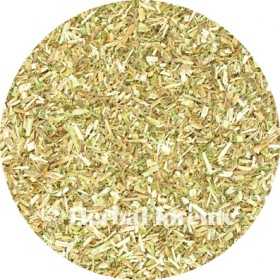
Hyssop - Hyssopus officinalis
Hyssop (Hyssopus officinalis) belongs to the Lamiaceae family and is an herb with valuable essential oils.
This striking shrub reaches a height of 30 to 60 cm and has a woody base with ascending branches. The dark green lanceolate leaves are about 2 to 2.5 cm long. During the flowering period, from July to September, hyssop produces small blue/lilac-like lipped flowers that grow in whorls, although some specimens may be white or pink.
This striking shrub reaches a height of 30 to 60 cm and has a woody base with ascending branches. The dark green lanceolate leaves are about 2 to 2.5 cm long. During the flowering period, from July to September, hyssop produces small blue/lilac-like lipped flowers that grow in whorls, although some specimens may be white or pink.
€1.95
From: €1.95
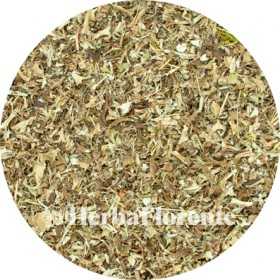
Iceland moss - Cetraria islandicus
Iceland moss (Cetraria islandica), also known by the basic name Lichen islandicus, is a shrubby lichen belonging to the Parmeliaceae family (shell mosses). The species is native to cold and mountainous regions and is extremely rare in the Netherlands. For this reason, Iceland moss is listed on the Dutch Red List as critically endangered.
Iceland moss has a long cultural and historical background. Botanical and historical sources from the 17th century describe the lichen as part of the botanical knowledge of the time. During that period, the lichen was collected whole and used in traditional practices. These uses are part of historical and folklore.
Iceland moss has a long cultural and historical background. Botanical and historical sources from the 17th century describe the lichen as part of the botanical knowledge of the time. During that period, the lichen was collected whole and used in traditional practices. These uses are part of historical and folklore.
€3.00
From: €3.00