



Trending
€57.50
€62.50

€35.95
€62.50
€62.50
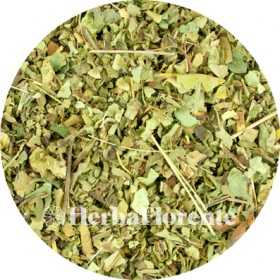
Lungwort - Pulmonaria officinalis
€5.91 €6.95 -15%
Echinacea (Red Coneflower) - 350 mg
€15.96 €19.95 -20%
English name
There are 38 products.
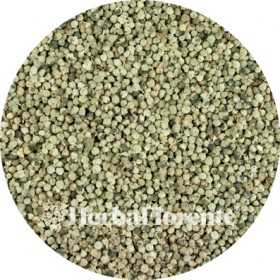
Monk's Pepper - Vitex agnus castus
Chasteberry (Vitex agnus castus L.), also known as chaste tree berries, is a plant native to the Mediterranean region. The name "chasteberry" refers to its historical use by monks, who used the herb for its supposed effects on physical desire.
Today, chasteberry is widely used in herbal products and supplements. The plant's fruits contain various plant compounds, including flavonoids and iridoids, which give the herb its unique properties. Chasteberry is popular in traditional herbalism and is valued for its long history of use.
Today, chasteberry is widely used in herbal products and supplements. The plant's fruits contain various plant compounds, including flavonoids and iridoids, which give the herb its unique properties. Chasteberry is popular in traditional herbalism and is valued for its long history of use.
€2.00
From: €2.00
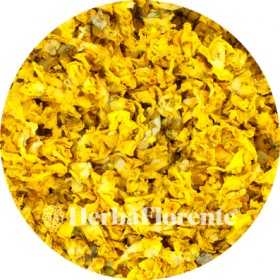
Mullein - Verbascum thapsus
The mullein (Verbascum thapsus) is a member of the marram family (Scrophulariaceae) and mainly thrives in dune and chalk areas, where it is quite common. This plant is rare to find elsewhere in the Netherlands.
The flowers of the mullein are yellow and have a diameter of 1.5–3 cm. They consist of five connate petals, five sepals and five stamens, three of which are covered with yellow or white hairs. The flowers grow in dense spikes and bloom from July to autumn. An adult plant can reach a height of more than two meters.
The flowers of the mullein are yellow and have a diameter of 1.5–3 cm. They consist of five connate petals, five sepals and five stamens, three of which are covered with yellow or white hairs. The flowers grow in dense spikes and bloom from July to autumn. An adult plant can reach a height of more than two meters.
€5.00
From: €5.00
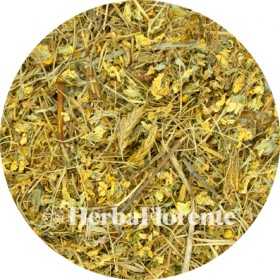
Pansy, Herb trinit (Flower) - Viola tricolor
Out-of-Stock
The pansy (Viola tricolor), also known as the wild violet, is an ornamental plant that has been part of European botanical knowledge for centuries. The tricolor violet belongs to the pansy family (Violaceae) and is native to Europe, from Lapland to the Mediterranean, and even to Siberia.
This plant, which is annual but can sometimes be perennial, grows to a height of 30 cm and has roots that can reach depths of up to 45 cm. Its flowering period extends from May to October. The flowers are at least 1 cm wide, but usually larger, with an average diameter of 1.5 cm. The plant was first described by the renowned botanist Rembert Dodoens in 1554.
This plant, which is annual but can sometimes be perennial, grows to a height of 30 cm and has roots that can reach depths of up to 45 cm. Its flowering period extends from May to October. The flowers are at least 1 cm wide, but usually larger, with an average diameter of 1.5 cm. The plant was first described by the renowned botanist Rembert Dodoens in 1554.
€7.00
From: €7.00
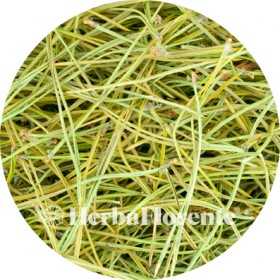
Pine (Needles) - Pinus silvestris
The Scots pine (Pinus sylvestris) belongs to the pine family (Pinaceae) and can reach an age of 200 to 300 years. This tree is known for its rich resin content and characteristic pine scent.
The needles and buds of the Scots pine contain natural compounds such as tannins, flavonoids, and vitamins. The tree's resin contains turpentine and a large number of monoterpenes, including α-pinene, β-pinene, and limonene, which are components of the tree's essential oil.
Scots pine is traditionally used in various applications, such as in aromatic products and in the production of pine oil. Both needles and buds are used in some traditional preparations for their fragrance and flavor.
The needles and buds of the Scots pine contain natural compounds such as tannins, flavonoids, and vitamins. The tree's resin contains turpentine and a large number of monoterpenes, including α-pinene, β-pinene, and limonene, which are components of the tree's essential oil.
Scots pine is traditionally used in various applications, such as in aromatic products and in the production of pine oil. Both needles and buds are used in some traditional preparations for their fragrance and flavor.
€2.00
From: €2.00
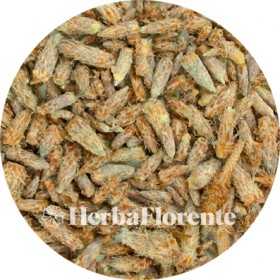
Pine (Seedlings) - Pinus silvestris
The Scots pine (Pinus sylvestris) belongs to the pine family (Pinaceae) and can reach an age of 200 to 300 years. This tree is known for its rich resin content and characteristic pine scent.
The needles and buds of the Scots pine contain natural compounds such as tannins, flavonoids, and vitamins. The tree's resin contains turpentine and a large number of monoterpenes, including α-pinene, β-pinene, and limonene, which are components of the tree's essential oil.
Scots pine is traditionally used in various applications, such as in aromatic products and in the production of pine oil. Both needles and buds are used in some traditional preparations for their fragrance and flavor.
The needles and buds of the Scots pine contain natural compounds such as tannins, flavonoids, and vitamins. The tree's resin contains turpentine and a large number of monoterpenes, including α-pinene, β-pinene, and limonene, which are components of the tree's essential oil.
Scots pine is traditionally used in various applications, such as in aromatic products and in the production of pine oil. Both needles and buds are used in some traditional preparations for their fragrance and flavor.
€2.80
From: €2.80
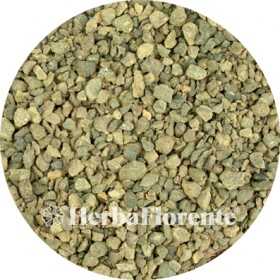
Propolis - Propolis
Propolis is a natural, reddish-brown substance produced by honeybees. Within the hive, bees use propolis as a building and sealing material, among other things, to close openings and strengthen the hive's structure.
Honeybees collect propolis starting in the summer on warm days by gathering resins from the buds and leaves of trees and other plants. These resins are mixed with beeswax and processed with saliva and the bees' legs, creating propolis.
Propolis consists of a combination of plant resins, beeswax, essential oils, and pollen, along with small amounts of vitamins and minerals. The composition can vary depending on the plants in the hive's environment.
Honeybees collect propolis starting in the summer on warm days by gathering resins from the buds and leaves of trees and other plants. These resins are mixed with beeswax and processed with saliva and the bees' legs, creating propolis.
Propolis consists of a combination of plant resins, beeswax, essential oils, and pollen, along with small amounts of vitamins and minerals. The composition can vary depending on the plants in the hive's environment.
€44.00
From: €44.00
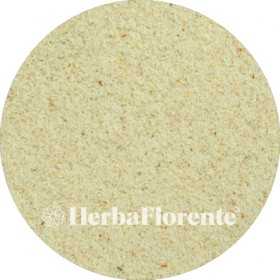
Psyllium husks (Premium Psyllium Fiber) - Psylli flavum Testa
Psyllium husk comes from the seeds of the Plantago psyllium plant. These seeds are largely fiber-rich and are often used as an ingredient in nutritional products and supplements. Psyllium contains both soluble and insoluble fiber.
The seed consists of over 80% fiber, of which approximately 70% is soluble and 30% is insoluble. When psyllium husk comes into contact with water, it forms a gel-like substance that can absorb a significant amount of fluid. Therefore, it is important to drink plenty of water when using psyllium.
Because of these properties, psyllium is often used in products intended to supplement daily fiber intake.
The seed consists of over 80% fiber, of which approximately 70% is soluble and 30% is insoluble. When psyllium husk comes into contact with water, it forms a gel-like substance that can absorb a significant amount of fluid. Therefore, it is important to drink plenty of water when using psyllium.
Because of these properties, psyllium is often used in products intended to supplement daily fiber intake.
€2.80
From: €2.80
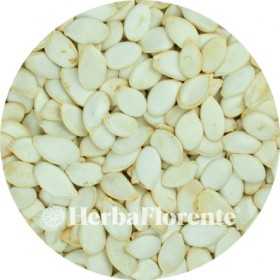
Pumpkin Seeds - Cucurbitae incortis
Pumpkin seeds are rich in nutrients and calories, with a particularly high fat content (especially linoleic acid and oleic acid), protein, dietary fiber and numerous micronutrients. Pumpkin seeds are a common ingredient in Mexican cuisine and are also roasted and served as a snack.
€2.00
From: €2.00
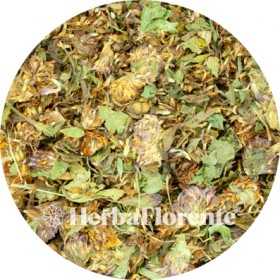
Red Clover (Flower) - Trifolii Rubr. pratense - Whole
Red clover (Trifolium pratense) is a plant native to Europe and Central Asia. It is characterized by its compound leaves, which usually consist of three leaflets, and its light purple flower heads.
Red clover flower heads naturally contain various plant compounds, including isoflavones. Isoflavones belong to the polyphenol group and are part of the plant's natural composition. Red clover also contains vitamins such as vitamin C, B1, B2, B3, beta-carotene, and choline.
Red clover has a long history of use in various cultures and is now incorporated into a variety of herbal preparations, such as teas and other plant products.
Red clover flower heads naturally contain various plant compounds, including isoflavones. Isoflavones belong to the polyphenol group and are part of the plant's natural composition. Red clover also contains vitamins such as vitamin C, B1, B2, B3, beta-carotene, and choline.
Red clover has a long history of use in various cultures and is now incorporated into a variety of herbal preparations, such as teas and other plant products.
€3.60
From: €3.60
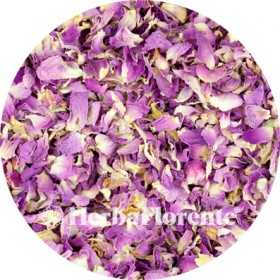
Rose - Rosae damascena
Rosae damascena, also known as the damask rose, is a versatile flower with many names, including the Iranian rose, Bulgarian rose, Taif rose, Ispahan rose and Castile rose.
These flowers are known for their delicate fragrance and are grown commercially for rose oil, both "rose otto" and "rose absolute", which is widely used in perfumery. They are also used to make rose water and "rose concrete". The petals are even edible and are used to flavor dishes, as a garnish, to make herbal tea and to preserve gulkand in sugar. Moreover, the damask rose is the national flower of Iran.
These flowers are known for their delicate fragrance and are grown commercially for rose oil, both "rose otto" and "rose absolute", which is widely used in perfumery. They are also used to make rose water and "rose concrete". The petals are even edible and are used to flavor dishes, as a garnish, to make herbal tea and to preserve gulkand in sugar. Moreover, the damask rose is the national flower of Iran.
€12.50
From: €12.50
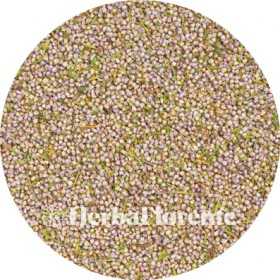
Shrub Heather (Flower) - Erica vulgaris
The Heather (Erica vulgaris - Calluna vulgaris) belongs to the heath family (Ericaceae) and grows throughout Europe, especially in Central and Northern Europe. It even reaches Western Siberia in the east. In the nineteenth century, Scottish immigrants brought the heather to Canada, from where it spread throughout North America. It is the only species in the genus Calluna, meaning it is a monotypic genus.
The shrub heath can grow to a height of 10-100 cm, sometimes even up to 150 cm in certain places. It has hermaphroditic, symmetrical flowers, with the calyx and petals being the same color. Purple flowers appear towards the end of the branches, creating the purple heaths from late July to early September.
The shrub heath can grow to a height of 10-100 cm, sometimes even up to 150 cm in certain places. It has hermaphroditic, symmetrical flowers, with the calyx and petals being the same color. Purple flowers appear towards the end of the branches, creating the purple heaths from late July to early September.
€2.80
From: €2.80
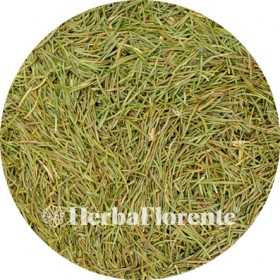
Spruce - Picea Abies
The Norway spruce (Picea abies) belongs to the pine family (Pinaceae) and is native to Northern and Central Europe. It is an imposing conifer that can grow up to 50 meters high.
This tree is monoecious and has a narrow, cone-shaped crown. Spruce trees that grow at lower elevations tend to have wider crowns to be less affected by snow accumulation. The twigs are reddish to orange-brown, while the buds are smooth, brown and pointed. The needles are dark green on all sides and surround the twigs. They are stiff, sharply pointed, square in cross-section and can grow 1 to 2.5 cm long. The lifespan of the needles can be up to 5 to 7 years.
This tree is monoecious and has a narrow, cone-shaped crown. Spruce trees that grow at lower elevations tend to have wider crowns to be less affected by snow accumulation. The twigs are reddish to orange-brown, while the buds are smooth, brown and pointed. The needles are dark green on all sides and surround the twigs. They are stiff, sharply pointed, square in cross-section and can grow 1 to 2.5 cm long. The lifespan of the needles can be up to 5 to 7 years.
€2.00
From: €2.00
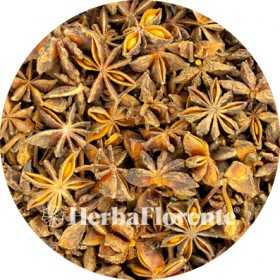
Star Anise - Anisi stell.
Star anise is a tree or shrub whose fruits serve as a spice. Originally from southern China and Vietnam, it is now also grown in Cambodia, Laos, Japan and the Philippines. Best known for its eight-armed fruits, this tree has been known as a spice in Europe since the 17th century, but is best known for its Asian flavor profile. Star anise thrives in warm tropical areas.
The fruits are often used whole or ground into an easily dosed powder. The spicy taste is not in the seeds, but in the lignified peel of the fruit. Star anise has an intense scent of anise due to the large amount of anethole in the essential oil. The taste of the fruit is richer and firmer than that of the anise plant.
The fruits are often used whole or ground into an easily dosed powder. The spicy taste is not in the seeds, but in the lignified peel of the fruit. Star anise has an intense scent of anise due to the large amount of anethole in the essential oil. The taste of the fruit is richer and firmer than that of the anise plant.
€6.00
From: €6.00
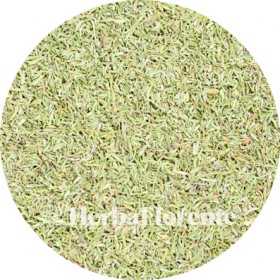
Thyme - Thymii vulgaris - Cut
Thyme is a herb valued in both cooking and traditional applications. It is recognizable by its distinctive aroma and can be used in teas, spice blends, syrups, or as a seasoning in dishes.
Thyme grows naturally in Europe, Asia, and Africa, forming hardy shrubs approximately 40 centimeters tall. The herb thrives in dry and stony soils. Both the leaves and flowers of thyme contain various plant compounds, including essential oils and flavonoids.
Thyme was used by the Greeks and Romans since ancient times, primarily for its aroma and culinary uses. Today, thyme is still valued for its fragrance and flavor.
Thyme grows naturally in Europe, Asia, and Africa, forming hardy shrubs approximately 40 centimeters tall. The herb thrives in dry and stony soils. Both the leaves and flowers of thyme contain various plant compounds, including essential oils and flavonoids.
Thyme was used by the Greeks and Romans since ancient times, primarily for its aroma and culinary uses. Today, thyme is still valued for its fragrance and flavor.
€2.20
From: €2.20